We Sacrifice People for Performance. AI Is About to Make That Impossible ft. Margôt van Brakel
This episode challenges a core assumption most tech leaders still operate under: that intelligence is our primary advantage. As AI systems begin to outperform humans in reasoning and decision-making, this conversation reframes AI not as another step in the industrial revolution, but as the start of an intelligence revolution. For CTOs and business leaders, this shift forces a deeper question. If machines can think, what is left for humans to lead?
You’ll learn why performance-driven organizations are hitting a ceiling and why continuing to optimize for efficiency alone will limit long-term value. The discussion explores a transition already underway, from purely economic thinking toward purpose, connection, and responsibility. It also highlights how board-level conversations are evolving, moving from short-term business cases to broader value-based decisions that shape the future of the organization and society.
The episode also brings this down to action. It outlines how leaders and teams can respond today through experimentation, curiosity, and intentional time spent on change rather than just execution. You’ll walk away with a clearer perspective on how to position your organization in a world where AI handles more of the thinking, and where leadership is defined by the ability to rethink strategy, culture, and human contribution at a fundamental level.
Key Takeaways
• AI is replacing not just manual work but cognitive work, forcing leaders to redefine human value beyond intelligence
• Performance-driven cultures are reaching their limits; future organizations must prioritize meaning, connection, and long-term value
• Strategy must shift from pure business cases to value cases, balancing today’s results with tomorrow’s impact
• Leaders should foster experimentation by allocating time for learning, not just execution, to unlock AI’s real potential
• Organizations that combine human strengths with AI effectively will outpace slower, legacy-driven competitors
• The most critical leadership skill ahead is not control, but curiosity, responsibility, and the ability to rethink assumptions
About Margôt
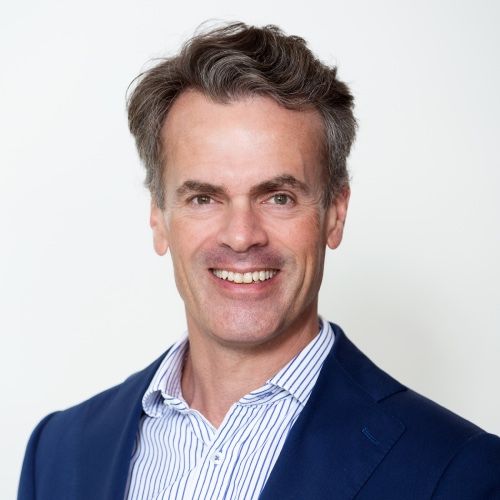
Margôt van Brakel is a keynote speaker, author, and advisor with more than 20 years of experience guiding organizations through complex change. She works with boards and executive teams on the human side of AI — exploring how organizations can use technology as a means, not an end, and find the right balance between people and machines. Her work focuses on what it means to keep human value at the center of organizational transformation. Because this is not the next wave in the industrial revolution — it is a new one. And that changes everything about the questions leaders need to ask.
Chapters
00:00 Margôt Journey
05:42 Treating People as Machines
12:38 AI's Societal Impact
12:06 Ad
20:32 What is Your Responsibility?
26:00 What is Homo Conexus?
39:01 Ad
38:12 The Ugly Phase of Transformation
42:25 A Hopeful Perspective!
Where to find Margôt
• Website: https://margotvanbrakel.com
• LinkedIn: https://www.linkedin.com/in/margotvanbrakel/
• Instagram: https://www.instagram.com/margotvanbrakel/
Transcript
In my opinion, it's something different because what we had before is a machine that can do something that basically our hands can do. But now we've built a machine that takes over something that our mind does.
So the thinking part is new in this phase with AI. We are smart. We can think. I think, therefore I am. It's no longer true.
So instead of saying this is the next phase in the industrial revolution, I call this the intelligence revolution. We've developed something that is smarter than.
Mark:Us. Welcome to the CTO Compass podcast. I'm your host, Mark Wormgoor, tech strategist and executive coach. In every episode, we meet tech leaders from startup CTOs to enterprise CIOs to explore what it means to lead in tech today. They share their stories and their lessons so that you can navigate your own journey in tech. Let's dive into today's episode. For 400 years, we've been building this civilization around reason. René Descartes, I think, therefore I am, and Margôt is going to tell us a lot more about that. Are now at the point where we're actually no longer that good ourselves, but we're building machines that can think and reason and often perform better. Than us, than humans.
So what does it actually mean? What does it mean for us as humans? What does it mean for the businesses? What does that mean for society? Margôt is here today to actually talk about all of that. And she's written a book on this. Unfortunately, it's in Dutch, so we can't see it or you can't all read it. It's AI and the Human of Tomorrow.
So Margôt, before we get into all of that, What's your background? Where do you come from? And how did you end up doing this?
Margôt:Yeah, good question. So my background is organizational change.
So for over 20, I think nearly 25 years, I've been involved in big changes in mainly corporate environments. So sometimes it was a new strategy or Yeah, no. Big changes, a new brand, or sometimes companies just split into, you know, big things. And I was always involved in how to engage the people in the organization in the change.
And then more and more, these changes were related to technology. So... At first we had the new way of working like every like we had yet it seems a long time ago but it's not really that long ago that with a laptop you could really work anywhere you wanted. But then we had automation, digitalization, working more with data and somewhere along the line Two things happened. One is that I... I found this book, which is called To Be a Machine. And so in the street where I live, there was a little bookstore and I was always browsing and finding new books. And there this was, this book was there to be a machine. And I thought, What a fascinating title. Why would you want to be a machine?
So I bought this book and it was written by a journalist who did all these interviews with people that were doing kind of radical things. So it was people in the cyborg scene. There were people that were, I think it's called where you freeze in people so that maybe in 50 years you can be unfrozen and then you can continue your life.
And then in all of this, there were AI scientists, And that really triggered my interest in AI. And I thought, something is really happening because we have all this technology. But now we have technology that's going to be smarter than us.
So what does it mean for us? So that was one thing that happened.
And then the other thing is that in the work that I did, I felt that we were not treating our people well. So we treated people like machines. There was the sounding board that I was part of. And in the sounding board was a large international company. The question was asked, how do you feel being an employee in this company?
And then one of the people said, We sacrifice people for the sake of performance. Exactly these words and That just, well, it stuck with me. And so it wasn't just the one person because when he said this, other people joined in and they came with examples of some consultancy that had figured out that we could do standard procedures all around the world in the same way and saying that they get less time to do things. Because it didn't work in that way for their customers. They really had to put in more time, but they weren't given more time.
So we sacrifice people for the sake of performance. So I thought something is going wrong. We're treating people like machines and there's this thing coming that is smarter than us.
y journey and that was around: Mark:I saw your TEDx talk about this as well. And that was very interesting. Let's take it back. 400 years, maybe, the entire industrial revolution. How did we end up here treating... People as machines.
Margôt:Yeah. So the way that I see it is that 400 years ago, we had Rene Descartes and he introduced something that was kind of a sign of the time. He was not the only one, but it fits with where we were as humans. He said, I think, therefore I am. And up till then, the church really had all the power. And so we just, it actually, life was pretty simple. You just followed the rule of the church, of the Bible. That was it. But then Rene Descartes came and he said something completely different. I think, therefore I am.
So the power shifted from church, from religion to religion. The ratio to our thinking power. And with that, it shifted towards science and everything Rational.
So what happened from there, 400 years later, Up till now, we've seen this huge progress, like science has brought us many things. So the life that we live today is due to kind of that shift But in... I think somewhere along the line, you have Taylor with the way that he approaches labor and Somewhere along the line, we've moved into this performance society, like the sacrifice people for the sake of performance.
So like everything is measured. You know, the moment you are born, you're already being measured. You're supposed to have like 10 points for like a little human being. You're supposed to have 10 points. If you don't have 10 points, you have nine or eight, then something is wrong. And this line is being continued.
So you go to school there, you're measured and always it's higher is better. So we see in the economy, we see in education, we see it in business, you have the MPS score.
Like the net promoter score. So how happy are your clients? How... It's always higher is better. And... Now I feel that we've reached the limits of what this is bringing us. And we see many signs. I'm having all these conversations with people on board level. And it's interesting that the conversations are changing.
So it's now, it's all, I wrote this book and this vision a while back, but slowly we are changing and we are all feeling that Something has to change. We can't move forward with this higher is better kind of living.
So we're at the end phase of what I would call the homo economicus. And Where we... Are invited and I think AI is a driver of this change because it makes a lot of things visible and it enables us to do things that we couldn't do before.
So we're at this cusp of a new time where things will be different. So we had this... Ratio for 400 years and now we're we are invited and the longer we wait, it's not going to be an invitation. It's going to be, yeah, more of a push towards something new.
Mark:And part of that driver is, I think you're saying is AI. We've had all these, in the foreign years, all these technological revolutions to see machines and electricity and the computer and mobile and the internet and everything's happened. Why is AI different from all of those previous steps where basically machines replaced humans?
Margôt:Exactly. So some people say that this is another phase in the industrial revolution.
So we had all these phases. In my opinion, it's something different because what we had before is a machine that can do something that basically our hands can do. But now we are We've built a machine that takes over something that our mind does.
So the thinking part is new in this phase with AI. So where as humans, we've been thinking that our intelligence is what makes us stand out, right? We are smart. We can think. I think, therefore I am.
So this is like has been our... Something that stood out for us as humans, it's no longer true.
So instead of saying this is the next phase in the industrial revolution, I call this the intelligence revolution. Because We've developed something that is smarter than us. Now you could say, It's just a matter of definition. What is intelligence? But The thinking power of AI is something that we can never beat.
So this is, so this, Yeah. As I said, it invites us to rethink ourselves because if we thought that our intelligence was our unique selling point. Then we're selling ourselves short because We have AI, we developed AI, and it's going to be smarter than us.
So that's where the question comes in. What makes us different, what makes us stand out, what is the unique quality of humans? And in my opinion, so that's not our intelligence, but it's our ability and our needs for connection, to be connected with yourself with the other, and with all there.
Mark:Is. Before we jump back in, here is something that I've learned from over 30 years of working in technology. The hardest part of leadership, it's not the technology. And it's not even the people or the teams. It's often that you're added alone by yourself. There's no one in the room that fully gets what you're dealing with. There's no one that you can trust to discuss your decision with. If that sounds familiar, find me on LinkedIn. Mark Wormgoor, and tell me what's in your mind. There's no pitch, just a discussion with somebody who's sat in a chair as well. Let's get back to it.
So on the one hand, we have this industrial revolution, which has gone into AI and is now, well, thinking maybe at some point in something smarter than us and it's going really fast. On the other hand, we have this societal change. And I think you just said it already feels that something is coming to an end. People are no longer happy just being machines. You wrote about the different generations from boomers to Gen Z. I've read your take on this with the Gallup scores that we're seeing. What is that other evolution or change that we're seeing in our society?
Margôt:So that's the change of..... Of values, I think. And so these 400 years, we've seen this huge, the economical growth, and the idea of It's all about me.
So I want to like individualism. If everything is good for me, that's like the highest thing that you can achieve. I want to have a better job. I want to have a better pay. I want to have a bigger house. I want to have... It's all about me and it's about... The having like all this stuff that we need. And. As we.
Yeah, I think the last 10, 15, probably a bit longer. Slowly, there's become more awareness that having is not what makes us happy. It's not, you know, you can have a bigger car and then you may be happy for five minutes and then You may think you want an even bigger car. And so... You can look at the pyramid of Maslow.
So I think that's a very valid way of looking at things. So Maslow, the way that we know Maslow is the pyramid with five layers and the top layer is about self-actualization.
So you could kind of say it's about the me, the I, but then the Fascinating fact is that Maslow during his life, when he got older, he developed a sixth layer. Most people don't know this sixth layer. And I think that's because it didn't fit with our way of thinking about the world. Because as he grew older, he realized that it's not the I, the self that it's all about, but it's self transcendence.
So when you... Have become yourself, then The need on top of that. Is self-transcendence, where you become meaningful because you are part of a bigger whole that transcends yourself. And I think it's an evolutionary thing because we have all the things. We have a home. And you could argue there's war in the world now, so there are uncertainties. But compared to 400 years ago, we've come a long way.
So in this pyramid of Maslow, we've been growing and we're reaching the top where we realize that it's not just about me, but it's about me being part of a bigger whole. And then what I see is that AI is a driver, but it's, a shift, a slow shift in values that what is important is not the having of stuff. Importance is a meaningful, purposeful life. And we see that, for instance, Gen Z, research shows that Gen Z has different values than, for instance, the boomers. And because of the situation that we are in, that Gen Z has qualities that we, or older people, are just not, you know, we are not native digital people, native...
So... Young people have a stronger influence on where we're going than maybe before.
So I think it's a lot of things coming together, but it's a natural evolution.
Mark:So then what's... Before I said, how do you and how do boards, when you talk to boards and you talk about this evolution, about this AI road, about the different generations, about the self- transcendence or at least the, yeah, which is taking care of the world and taking care of society and having this bigger purpose. How did they respond to that?
Margôt:Yeah. So, years ago, it was too philosophical.
So nice story, Margôt, but we have our business. Now I have different conversations because... And I think that's because things are changing. Being driven to the point where it starts hurting.
So for instance, with a war going on, the We look at what's happening in the US and Trump and we feel, is this the world we want to live in? And then, So what I recognize is that there is an increase in responsibility for making right decisions for tomorrow. And to make decisions, you need a vision.
So yes, there's always this focus on what do I need today and what do I need tomorrow. But without the vision of the bigger picture, you can't really make the right decisions. And I know that we in the business 10 years or longer, there's this distinction between the business case and the value case. And this was So, We talk about the value case. In the end, for a long time, it was still the business case that ruled. But now, slowly, we're moving towards the value case. And I see that people on board level are... Daring to be bolder. Daring to feel and open up to the responsibility or I think maybe be more.. Open about the responsibility that they feel for Bing! open for really rethinking because that's The time of now is a transformational time. And that means that if we keep doing the things that we did before, we're not going to benefit for one from what AI for instance can bring but we're yeah we're not moving like evolving as we could so we're leaving so much potential behind And I see there's more openness to rethink. At the same time, it's always a stretch because you have the responsibility for today and you have the responsibility for tomorrow. Obviously, my role is to challenge, to make sure that we don't forget the responsibility for tomorrow. And I feed into this.
And then it all starts with small things that you can do. So it's not like taking a big leap.
So we're not going to do things quickly. Dramatically different tomorrow, but we can take smaller steps moving in the right direction.
Mark:So, and if... Businesses are doing that.
I mean, it's nice that that's happening at the board level. If I'm just a small coke somewhere in a company, what can I do? How do I... How should I evolve if my job is actually, the reasoning, if it's the efficiency, if it's all the stuff that is maybe probably likely going to be overtaken by AI, What do I.
Margôt:Do? Yeah, so the... Every change starts with yourself.
So I think the one thing that I am... Worried about that I do not want to accept is that people say, I can't do anything. We can all do something. And..... We really have the responsibility to do something. In, There is something that is problematic, which is that We are being led into being fearful about the future. And if you look at the news, there's a lot of negative things happening.
And then you can think from... So for instance, my dad is 90 years old and So if he's actually happy that at some point he's going to die because he doesn't have a positive perspective on the future. We need a positive perspective and we have the power to turn the time.
So if we, so what can you do is, I always say that radical curiosity, so not just curiosity, but radical curiosity is a perfect way to open up to new things. So, in this time, it's good to be informed and be informed or be curious about not just the things that you are normally interested in, but in the things that You may think, this is not for me. Or it will pass or whatever. Open the door. Investigate. Experiment a little. Because if you are informed, you make different decisions. We can't leave the decisions over to that's like the thing with AI. The responsibility for AI is so big, we cannot leave it up to the AI developers. We need to take this responsibility with a much larger group, like with society as a whole. What do we want that AI does for us? What are the guardrails that we want to have in place? Instead of thinking, well, those people building it, they will do the right thing. We can't leave it up to them.
So taking responsibility, being curious, opening up doors, And then in the agile world, there's this wonderful principle of the run and the change. So the run, for people who don't know this, the run is what you have to do in your work or in your life. It's just the daily things that you have to do.
Like I have to... Clean the house, do the groceries. It's like just keeping things up and running, whether it's just your life or it's your work. That's just the things that need to happen. The change is time that you dedicate to doing things better for tomorrow.
So it's time that you invest upfront. To do things differently. And in our life and in our work, Everyone should dedicate time.
So 10% would be good. If you can't make 10%, then just start with 5%, but make sure that in your week, You have dedicated time to... To figure out how you can do things differently. Because if you invest in the change, you make the run of tomorrow better. And for instance, when you look at the whole possibilities of AI, it's good to dedicate some time to just experiment and see what can it do for me? You don't have to just... Create value straight away experiment first understand what it can do and then you can start implementing it and so this is you don't have to wait for the board to say we all go that way but everybody can do in his own work in his own life dedicate time to change and experiment I think one of the things, I'm sorry, I'm talking a long time. And one of the things that like, I remember from, like, beliefs is that first time right.
Like, so a lot of people that is like, this is the mantra. Everything has to be first time, right? That's killing. We don't, we really need to throw that out the door because If we dare to allow ourselves to make mistakes that's the fastest way to learn so instead of building up thinking this has to be right the first time no just go do it do small things experiment fail fast and then you can move forward.
Mark:Nice the other thing that you do you talk about is the connection homo conexus how does that fit in what is that and how does it fit into this picture.
Margôt:So the homo conexus, it's like a foundational perspective. So instead of so we go back to Rene Descartes, who really said what makes us different is our ability to think. And with AI, I thought this is no longer valid because the computer, the AI is smarter than us.
So what makes us different? That is our ability and our need for being connected. I think we saw that in the COVID time where connection was actually taken away from us, that we felt it's We are not meant to be on our own.
So we are really social creatures. The connection is what makes us different. And this connection, how does connection work? Because it seems like Okay, I'm connected and you could... Interprets it in many ways saying, well, we are connected because we are on a device, right? Digital connection. But the way that I explain connection is that it goes in four layers. The first layer is that you connect with yourself. And I call that identity is that you know who you are and that you are okay with who you are.
So this takes care of trying to be like everyone else. We really need to get rid of that instead of projecting or looking like I want to be like you. I want to have what you have. I want to be able to do what you have. It's about Being okay with who I am. It doesn't mean that I can't change, but just it starts with self-acceptance...
So that's the foundation of connection with yourself. Then the next phase is authenticity, where you stay yourself, stay true to yourself when you meet someone else. That it's not that you leave yourself at the door, but you... Allow yourself to shine through. Authenticity. The third phase is intimacy. Where this kind of an electrical energy going. Through me and the other. I see you see me. I show myself, you show yourself. That's where true connection happens between one and the other person.
And then the last phase is inclusiveness, where you realize and you feel that you are connected with a bigger whole that like, I'm part of this world. I'm part of nature. And when I feel this connection, then the climate problem is not just something that's, We have to think about when we think of our ESG scores, but it's something that does something with me in my daily choices, like What car do I drive? How do I, what food do I eat?
So this is how I explain make connection tangible And it's super simple. And the way that you could use it is not just for you as a person, but it works exactly the same way for companies or for teams. Who am I? Don't try to be like everyone else, but just... Know what your identity is. Stay true to that identity. Be authentic. Build meaningful relationships with others. And... Be responsible for your influence, for your part in the bigger whole.
So this is It's... Foundational way of looking at yourself. And the good thing is that when you start working with this connection, It's the way to let go of the grip. Of The Homo economicus, where we want to be better. We want to have more money. We want to have.
So when we start connecting, then. That grip is, becomes less and we can move. It helps us to move, to transition, to Yeah. A new system, a new society based on different.
Mark:Values. If we take that forward in maybe three, five or ten years, what does that mean? Mean for organizations that are now fully economically focused and that's slowly shifting, but every day we have people focused on the change, we have people focused on connection, on self-transcendence from an organizational perspective. What our business is going to look like.
Margôt:Yes. In the end, it's about that last phase for businesses to what do you contribute? And so I think that the starting question for organizations is, What am I here for?
And then how do I make that happen? And the what am I here for question may seem very obvious, but this is a time where we are invited to look at that question again, and maybe a different answer is going to surface than what we thought it would be. And instead of, so when we look at technology, what I see is that we're leaping into wanting to do more A lot with AI and with technology and thinking that AI is going to be the answer to everything and..... But if we don't ask that first question, then we're never going to be able to really benefit from the use of the technology that exists. The potential that is there.
So what am I here for as an organization? What is my contribution to the world to the society.
And then you can think of what is it where AI or technology can play a distinguished role, a significant role, but where do the people come in? So instead of approaching this from financial perspective, like what is our profit and loss and looking at the annual report and we need to have so much growth. It's really daring to start looking at things from a different perspective. And with that, So it's not going to be a big shift. It's going to be. Shifting slowly because we still are look at like financial markets like we have stocks you know at some point you need to report but parallel with the way that we've been doing, we can start looking at things differently and at the same time move towards a more value-based kind of doing business. And this is So five, 10 years, I don't know, transformation is not going to happen overnight. It's a slow process. Process, but it starts with thinking differently.
So if we don't change our thinking, we're going to end up with everything that we had before. And I think that is like the frustration with why don't we get value from AI, from tech is because we don't change our thinking. So slowly moving towards a new way of thinking, more value-based. And with that accept that we don't know the answers to everything yet.
Like for instance, in organizations, another very fascinating thing that is happening is that we have the young people that can do things that the older people can't do. They speak a different language. They have totally different skills. It doesn't mean that the older people are useless, but they, we need to, like the whole idea of having seniors and juniors needs to change.
So how can we use the talents and the skills of a younger generation combined with the experience and life experience of the more senior people without having the idea that your disqualified kind of that's what we don't want so there's many Change is happening at the same time. So we're talking now about organizations, but it means that our government, education, all this is happening at the same time.
So it's going through the same huge change at the same time. And in this change, I do believe that the driving force can be organizations. Because they have the power, they can move the fastest. They are less dependent on others.
So there, yeah. And when we talk about responsibility, there lies a big responsibility on the shoulders of, of these on the business side, of society.
Mark:Yeah, and then... From that, because I think you talked to, why not governments?
Yeah, I mean, A lot of businesses, organizations, and maybe even individuals, they look at the government as they should lead. They should tell us what to do and they should tell us as a society where to go. Why not them?
Margôt:They're just too slow. So it's, so yeah, I've been looking, thinking about this for a long time. Politics is, Isn't. Going to change anything because that just goes from four years to four years. They're always focused on the next election.
So politics is not going to bring us anything. Then we have governments. They do what they can, but they are just very slow movers. And I think government, they have the role of putting in guardrails but The thing is that we need to have... Moving space With guardrails? But we tend to go into complete want of control and that limits the space to move. And so why do businesses... It's logical. They are the most independent. They are the fastest moving. I've worked on both sides in government and in big commercial corporates. They can move fast. Doesn't mean that they do, but they can. And they can be a driving force. If they have The guts. 2 Do it. And to be honest, I think The larger corporates that will not show the guts, they will be overtaken by even faster moving smaller emerging companies that are making the best use of an excellent combination of human and AI.
So it's kind of an urgency at some.
Mark:Point. A quick one before we continue. If you're getting something out of this conversation, please hit the subscribe button below. That way, other tech leaders can find us as well. I would really appreciate it. Let's get back to it. You talk about this youth change, this transformation. I think in your book or somewhere else in your writing, you talk about the us being in the ugly phase of the transformation. What does that mean? Where are we going to? End of memo.
Margôt:Well, the ugly phase of transformation, I talk, there is difference between change and transformation. And... A lot of the time we've actually experienced change, not transformation.
So change is kind of the, it's without really going All in. So you leave the door open to change back. It's like you put on a different coat, but if you don't like it, you take it off and you put on another coat. It's nothing to do with transformation. Transformation, the best way to... Understand this is just thinking of the caterpillar and the butterfly.
So before the butterfly, goes through an ugly phase. Where the caterpillar transforms into a butterfly. And You can't speed up this process.
So, you have this phase where the caterpillar is in a cocoon and you could think, " we cut open the cocoon and then the butterfly can come out sooner and it can just spread its wings." In order to be able to fly, it needs to go through this process on its own. So because if it hasn't If it doesn't do that, then the whole body of the butterfly is not going to be in the position equipped to deal with the wings, etc.
So we're in the ugly phase because we, the potential of the wings are there and the potential of the butterfly, but we're still in this, like in this phase before we are becoming this because before we are this and. With transformation, it doesn't happen as a whole. It's not like you could go into a car wash. I've done a lot of culture programs and a lot of culture programs are like this. We have a car wash. We put everything, every employee into this. Mindset training, and then we hang up posters and then we think that at the end of this program, We're all transformed and we have a new culture and it doesn't happen that way. It's like transformation happens for every person, one person at a time.
So the transformation process for you is different than for me. And we may have a different pace. We're going to become different butterflies, but that's all good.
So instead of wanting to be Wanting for this to be an easy move, it's not easy. What we're seeing is that we're changing the system.
So we come from an old system where all the beliefs are not they're not valid anymore. So the whole economical system, the way that we've designed, the healthcare, education, everything. Everything is it can be questioned and then The potential is that we can rethink this and come out on the other side transformed, but it's not a clean cut.
So accepting that we're in the ugly phase, accepting that this is a process that doesn't come easy, But then the thing is, you can never go back. So it's not like you keep the door open. You go through the phase and then it's there.
And then you can't go back. You have the butterflies or you have the wings. You are the butterfly.
And then it's done. But we're not on that side yet.
Mark:And then my last question for you is what gives you hope? You talked about your father and I understand that.
I mean, we have so many different wars going on at the moment. We have leaders that are extreme left, extreme right. I decided the spectrum that our governments that maybe aren't, don't have always our best interests in mind, but just want to get reelected in four years. That's one side. On the other side, we have the individuals, we have Gen Z coming, we have all these businesses, these boards that have hope and are there yeah, creating or at least setting themselves up to create a more beautiful future. Why do you believe that seconds way for a second yeah second group is going to come out on top on this transformation.
Yeah.
Margôt:.. So I had a conversation, I think it was two or three weeks ago. And the other person asked me, do you believe this or do you know this? And so it's beyond belief. It's, and I think, so, Do I believe this? I believe it. But it's not a matter of I believe it and you don't believe it.
So it's beyond that. There are so many signs, so many initiatives, so many things already moving in the right direction already. That I can't say I can prove it in the rational Descartes kind of way. But it's much stronger than belief.
So I really..... And it's stronger than hope.
So there was someone else who said, well, what is hope? Hope is like putting it out there or Depending on something outside of you? I hope it's going to turn out. I have faith. I have faith that we are moving in the right direction and the conversations that I have and the initiatives that I see. And yes, with, I think there, sometimes things need to A bee. Obviously not what we want.
So that we really dare to make different choices. So at some point you... I might have hoped that through COVID we would have come out Wiser than we did. We didn't, right? After COVID, we kind of went back to where we were before. But so it was like A preface, but... In the time where we are at, there are a lot of things that are depressing.. But I think an important thing that I want to add is Fear is the worst thing to feel because if you are fearful, you are not going to take action.
So there's a lot of fear spreading and when you're in a fear state, You freeze. And I want people to see perspective, to see the potential, to understand that we have the power to empower people, that it all starts with yourself... And that I have faith that at some point we are going to move, that my children and the children of my children are going to be in a different world than we experienced today. Thank.
Mark:You. It's very inspirational. If people want to learn even more, they want to go deeper, where do they go?
Margôt:I invite everyone who wants to connect with me on LinkedIn and my website, margolfenbrakel.com. That's English and Dutch, bilingual. There's a lot of information there.
So... I think that, Two good ways to connect.
Yeah.
Mark:Thanks in the show notes for sure. Margôt, thank you very much for being here. It's been inspirational.
So thank you for that. And thank you for coming on the show today.
Margôt:Thank you, Mark. Thank you for inviting me.
Mark:As we wrap up another episode of the CTO Compass, thank you for taking the time to invest in you. The speed at which tech and AI develop is increasing. Demanding a new era of leaders in tech. Leaders that can juggle team and culture, code and infra, cyber and compliance. All whilst working closely with board members and stakeholders. We're here to help you learn from others, set your own goals and navigate your own journey. And until next time, Keep learning. Keep pushing and never stop growing.